
Explore the stories, technologies and achievements that make Tempur-Pedic® the most highly recommended mattress brand in America*.
Explore the stories, technologies and achievements that make Tempur-Pedic® the most highly recommended mattress brand in America*.
— by Tempur-Pedic on Jul 22, 2026
From scientific studies and our own personal experiences, we understand that quality sleep is a cornerstone for overall health, wellbeing, and productivity. When our sleep routine is disrupted — whether by a restless partner, a stressful week or even Daylight-Saving Time — the cascading negative effects are felt almost immediately. And while perspectives surrounding sleep and dreams have shifted and evolved over time, their power has captivated humans since the dawn of antiquity.
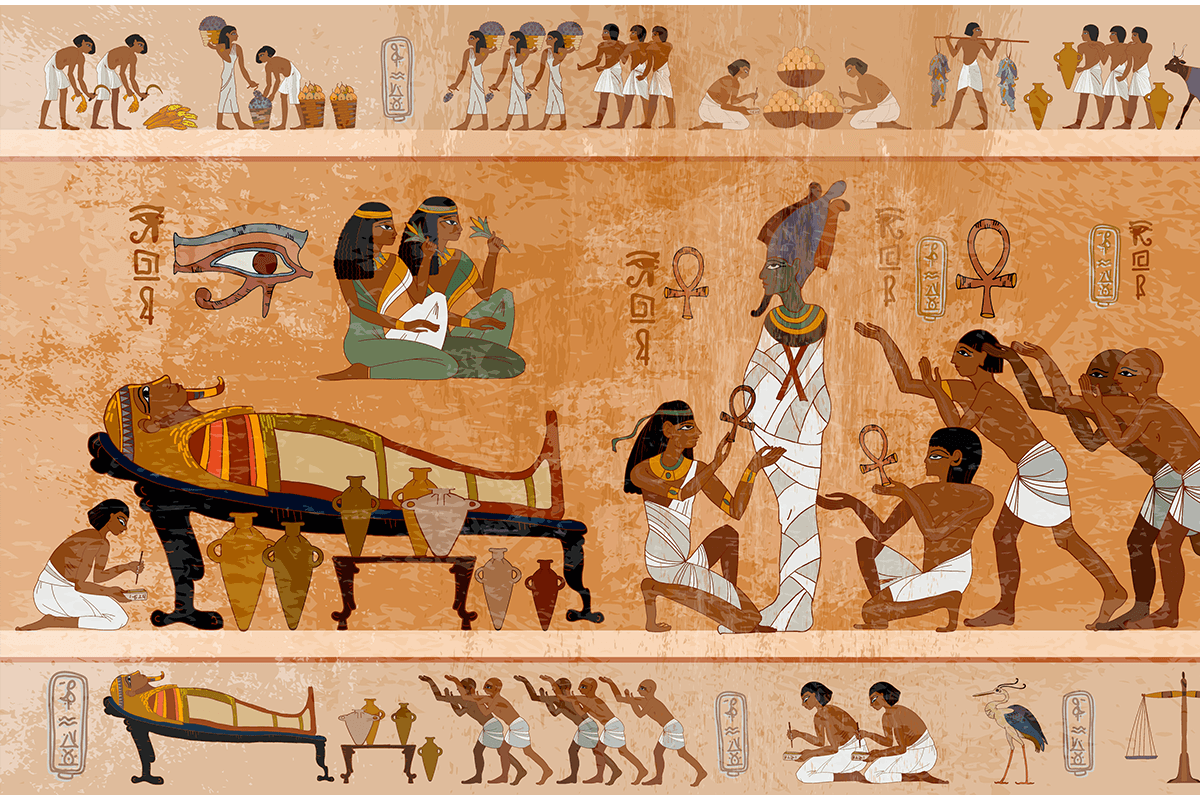
Historical evidence dating back as far as 4,000 years tells us that the earliest ancient civilizations were not only aware of the importance of sleep, but they actively worshipped it. Egyptians built “Sleep Temples” that functioned similarly to modern hospitals, where patients were taken to dark, quiet chambers and put into trance-like, hypnotic states to encourage healing. To identify and treat common ailments, the priests analyzed patients’ dreams, encouraged their communion with dead loved ones, and provided spiritual guidance (O'Neill, 2012, “Sleep and the Sleeping in Ancient Egypt”).
Similarly, in the Epic of Gilgamesh — a Mesopotamian hero story recorded in Sumerian on clay tablets around 2,000 BCE — sleep is described as an unavoidable truth (and in turn a human weakness that can’t be overcome), but also as a gift where your dreams allow you to better understand your past and see your future (Internet Public Library, n.d., “Theme of Sleep and Death in the Epic of Gilgamesh”). In both Egyptian and Mesopotamian cultures, sleep was seen as a gateway between this world and the next.
As the Greek Empire rose to prominence in the fifth century BCE, well-known philosophers like Aristotle began to ponder the possibility that sleep was in fact a biological necessity. Hippocrates, famous for the Hippocratic Oath, was born near the year 460 BCE on the Greek island of Kos and is credited as the first person to believe that diseases were caused by nature and not the will of the gods (Encyclopaedia Britannica, 2026; Wikipedia, 2026, “Hippocrates”). He also wrote extensively about sleep as a prerequisite for health and a long life.
A few hundred years later, the Romans continued to view sleep as an essential part of human existence. You may be familiar with the phrase “do as the Romans do,” and as it relates to sleep, you’d be well advised to try it. Much like the Greeks that influenced them, Romans were avid documentarians of both common habits and lofty philosophies. Their accounts tell us that they actively sought out the most comfortable sleeping surfaces available, usually a large cloth sack filled with hay, wool or feathers – an early ancestor of the modern mattress (American Academy of Sleep Medicine, 2023, “Sleep in Ancient Greece and Rome”).
The Romans also realized the detrimental side effects of insomnia [origin: Latin, from “insomnis” meaning sleepless] seeking relief in both medicinal remedies and faith-based methods, such as sleeping in sacred sites called Dream Oracles with the hope of achieving meaningful slumber. They revered their nightly rest and bedroom sanctuaries, and like the Greeks before them, included a personification of sleep in their pantheon of gods (in Greece, Hypnos, and in Rome, Somnus) (American Academy of Sleep Medicine, 2023).
While the connection between sleep and neurological function wouldn’t be discovered until the 17th century (a thousand years after the fall of Rome), ancient thinkers were respectful of the important role sleep plays in our daily lives — and enchanted by the imaginary worlds that dreams unlock.
Did ancient civilizations understand the importance of sleep?
Yes. Historical records from ancient Egypt, Mesopotamia, Greece and Rome show that sleep was considered essential for health, spirituality and daily life. Many cultures viewed sleep as both a physical necessity and a pathway to divine insight.1,2,4
Did ancient people believe dreams had meaning?
Yes. Many ancient cultures believed dreams conveyed messages from gods, ancestors, or supernatural forces. Egyptians, Mesopotamians, Greeks, and Romans often practiced dream interpretation as part of religious, medical, or philosophical traditions.1,2,4
What were Sleep Temples in ancient Egypt?
Sleep Temples were sacred healing spaces where individuals rested in controlled environments designed to encourage dreaming and recovery. Priests interpreted dreams and used them as part of spiritual and therapeutic practices.¹
How did the ancient Greeks view sleep?
Greek philosophers and physicians believed sleep played an important role in maintaining health. Thinkers such as Aristotle studied sleep's purpose, while Hippocrates associated healthy sleep with overall wellness and longevity.³
Why did the Romans care about sleep?
Romans recognized both the benefits of quality sleep and the problems caused by insomnia. They sought comfortable bedding and remedies for sleeplessness and incorporated sleep into religious and cultural traditions.⁴
Who were Hypnos and Somnus?
Hypnos was the Greek god of sleep, while Somnus was his Roman counterpart. Both figures represented the importance of sleep within their respective cultures and mythologies.⁴
What is the oldest written account of sleep and dreams?
Some of the oldest recorded references to sleep and dreaming appear in Mesopotamian literature, including the Epic of Gilgamesh, which dates to approximately 2000 BCE. Dreams play a significant role throughout the narrative.²
Have people always connected sleep and healing?
Yes. Ancient civilizations frequently linked sleep with physical recovery, spiritual wellbeing, and emotional healing. Egyptian Sleep Temples and Roman dream oracles are notable examples of this belief.1,4
Sources
1. O'Neill, Barbara. “Sleep and the Sleeping in Ancient Egypt”. Egyptological Magazine, 2012. https://www.academia.edu/105817433/Sleep_and_the_Sleeping_in_Ancient_EgyptThis academic paper examines the role of sleep, dreaming, headrests, funerary practices, and beliefs surrounding the relationship between sleep, death, and the divine in ancient Egyptian society. It discusses evidence showing how dreams were viewed as meaningful channels for communication with gods and the deceased.
2. Internet Public Library (IPL). “Theme of Sleep and Death in the Epic of Gilgamesh”. Publication date not specified. https://www.ipl.org/essay/Theme-Of-Sleep-And-Death-In-The-PJCMVHAVZV This literary analysis explores how sleep functions as a symbol of mortality, vulnerability, and spiritual insight within the Epic of Gilgamesh. The discussion highlights the Mesopotamian view of sleep as a force that reveals fundamental truths about human existence and death.
3. Encyclopaedia Britannica. “Hippocrates: Biography, Works, & Facts”. Updated 2026. https://www.britannica.com/biography/Hippocrates Britannica's biography of Hippocrates details the life and teachings of the ancient Greek physician often called the "Father of Medicine." The article explains his contribution to separating medicine from supernatural explanations and establishing observation-based approaches to health and disease.
4. Additional Reference: Wikipedia Contributors. “Hippocrates”. Wikipedia, 2026. https://en.wikipedia.org/wiki/Hippocrates Provides historical background, chronology, and discussion of Hippocrates's influence on medicine, including the Hippocratic tradition and its impact on medical ethics and clinical practice.
5. Vgontzas, Alexandros N., et al. “Sleep in Ancient Greece and Rome”. American Academy of Sleep Medicine (AASM), September 20, 2023. https://aasm.org/sleep-in-ancient-greece-and-rome/ This historical review published by the American Academy of Sleep Medicine examines ancient Greek and Roman beliefs about sleep, dreaming, insomnia, health, and healing. It discusses figures such as Hippocrates, Hypnos, and Somnus, while providing historical evidence that sleep was regarded as essential for physical wellbeing and longevity.
You’re using an unsupported web browser.
A list of the most popular browsers can be found below. Just click on an icon to visit the download page.
Your phone or tablet is using software unsupported by our website. To improve your shopping experience, please update your device to the latest version of iOS or Android OS.


